

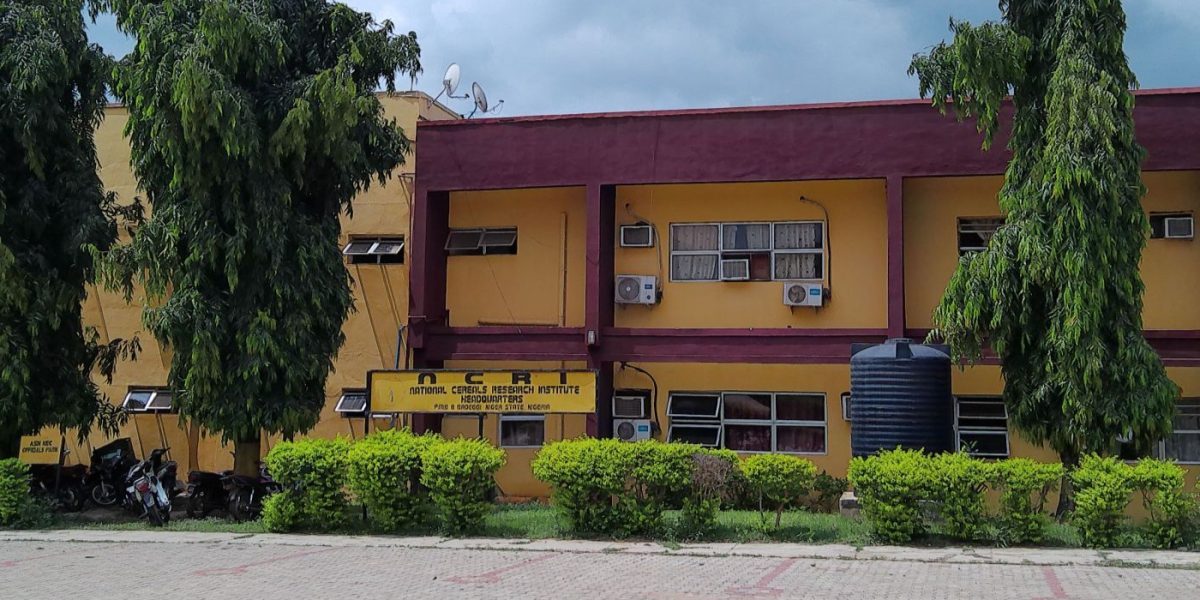
 Introduction
The Sugarcane Research Program of the National Cereals Research Institute (NCRI), Badeggi, Nigeria, is a flagship initiative dedicated to the development, improvement, and sustainability of sugarcane production in Nigeria. Established to support the nation’s sugar self-sufficiency drive and the objectives of the National Sugar Master Plan (NSMP), the program provides scientific innovations, improved technologies, and advisory services that enhance sugarcane productivity and profitability for farmers, industries, and other stakeholders.
Goals of the Program
- To develop and release high-yielding, early-maturing, and pest/disease-resistant sugarcane varieties suited to different agro-ecological zones of Nigeria.
- To enhance farmers’ access to improved planting materials and agronomic practices for increased sugar yield and profitability.
- To conduct research on efficient crop management practices, including soil fertility, water management, and weed/pest control.
- To provide technical backstopping for the Nigerian sugar industry and contribute to achieving national sugar sufficiency.
- To collaborate with sugar estates, out grower farmers, universities, and international research bodies for knowledge sharing and technology transfer.
Core Activities
- Breeding and varietal improvement through hybridization, selection, and evaluation of sugarcane clones.
- Agronomic trials focusing on soil fertility management, irrigation scheduling, mechanization, and weed/pest control strategies.
- Micropropagation and rapid multiplication of elite sugarcane varieties to meet planting material demand.
- Establishment of demonstration plots and on-farm trials across sugarcane producing regions.
- Capacity building through farmer training workshops, field days, and collaboration with sugar companies and institutions.
- Policy and advisory support to stakeholders within the sugar value chain.
- Through these initiatives, the NCRI Sugarcane Research Program continues to play a pivotal role in advancing Nigeria’s sugar sector, supporting food security, industrial growth, and economic diversification.
Collabotating Bodies
The programme collaborate with the following institutions/ organizations /companies namely: –
- National Sugar Development Council Abuja.
- University of Ilorin Sugar Research Institute.
- Raw Materials Research and Development Council Abuja.
- Bayer Agrochemical Germany.
- Golden Sugar Sunti.
- Gbajigi Sugarcane Farmers Association Bida.
- Josepdam Sugar Company Bacita.
- Nigerian National Petroleum Company (NNPC).
Major Achievements
- Development and release of several improved sugarcane varieties with higher sucrose content and adaptability to local growing conditions.
- Establishment of a robust sugarcane germplasm collection for breeding and research purposes.
- Successful training of sugarcane farmers, millers, and extension agents on modern agronomic practices.
- Significant contribution to the expansion of Nigeria’s sugarcane acreage through partnership with sugar estates and private investors.
- Provision of technical support to the Nigerian Sugar Development Council (NSDC) and sugar companies towards implementing the NSMP.
EIGHT SUGARCANE VARIETIES RELEASED WITH THEIR POTENTIALS DESCRIBED
| Varieties | Days to Maturity | Potential yield (t/ha) | Adaptation | Seed source | Other attributes |
| NCS-001 | Medium maturity 11-12 months | 104
|
well drains light and heavy fertile soil | LS-8 x (polycross)
|
Resistant towhip smut. None flowering |
| NCS-002 | Medium 11-12 months | 97 | Well drained light and heavy fertile soil. | LS-8 x (polycross) | Moderately resistant to whip smut and drought |
| NCS-003 | Early maturity
|
90 | very good yield in dry soils of drought prone areas. | OG-06 x Co 285 (bi-parental). | Tol. To stem borer and moderately resistant to whip smut |
| NCS-005 | Early maturity | 109
(plant crop) 90 (ratoon) |
fertile heavy soil of the fadama.
|
Composite (unknown)
|
Tol. To stem borer moderately resistant to whip smut
|
| NCS-006 | Late maturity | 105t/plant 93t/ratoon | Well drained light or heavy fertile soil. | B47419
(mutant) |
Highly resistant to whip smut |
| NCS-007 | Late maturity 14 – 16 months | 100
(plant crop) 90 (ratoon) |
Well drained light and fertile soil. | BJ6502
(mutant) |
Highly resistant to whip smut |
| NCS-008 | 9-11 months | 90
(plant crop) 86 (ratoon) |
Well drain, light or heavy fertile soil. | KD-11X (polycross)
|
Tol. to stem borer and termite |
| NCS-009 | Twelve (12) months | 101.1 t/ha | Well drained light and fertile soil of savana | KD – 01 X F141 | Tolerant to smut, red rot and drought. |